
Depth-oriented therapy
for
complex trauma, attachment trauma, dissociation, and dissociative disorders
LGBTQIA+ and neurodivergence affirming
If you grew up with some kind of significant dysfunction in your attachment figures or upbringing, it’s normal as an adult to experience a constellation of interconnected symptoms including anxiety, depression, chronic shame, interpersonal patterns like people pleasing or attachment difficulties, dysregulation such as dissociation or reactivity, unwanted coping strategies, being “self-aware” while still stuck, and dissonance between what is rationally known and what feels emotionally true.
I practice from the assumption that these all make sense on a deep and personal level to you, and that we can work with them instead of against them.
My approach.
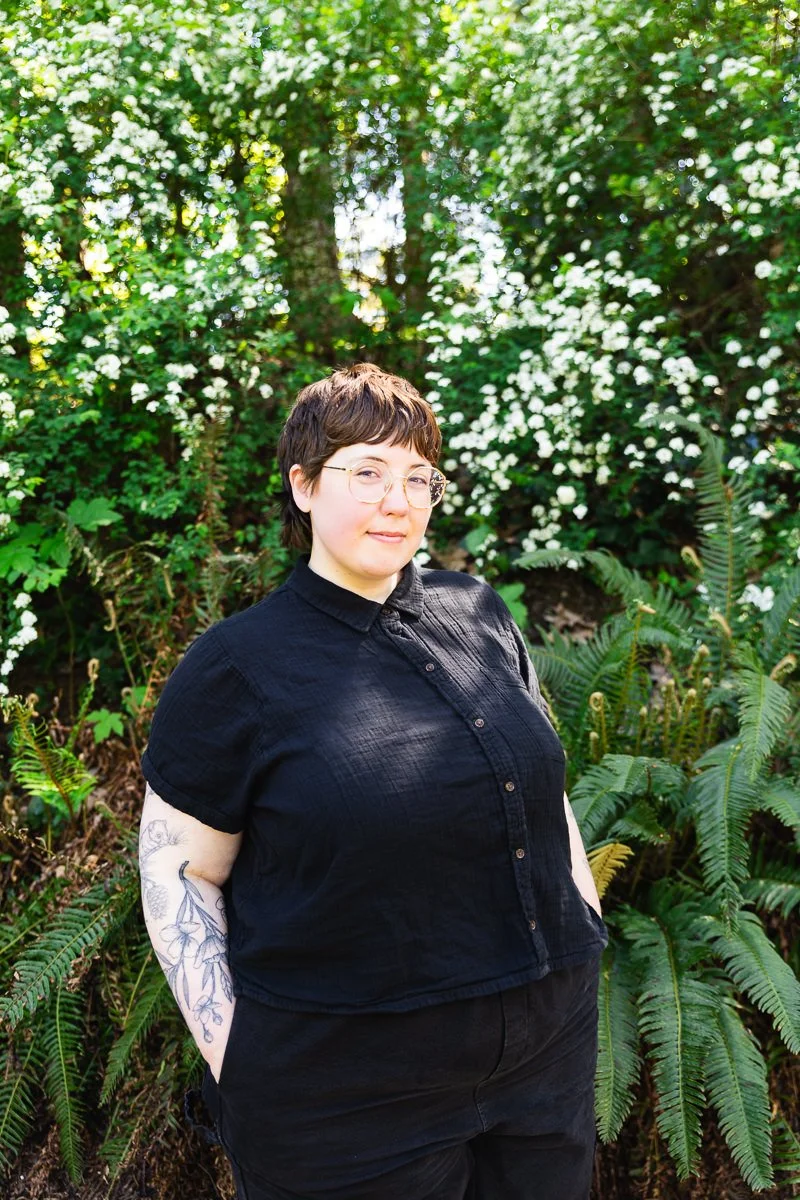
Hi, I’m Abby. I specialize in working with complex trauma and see difficult symptoms as well-intentioned solutions formed to help you survive.
My approach integrates experiential, depth-oriented styles of therapy including Coherence Therapy, Internal Family Systems, and Ego State Therapy with relational safety at the core. Instead of traditional talk therapy (where you stay in your head), we'll explore on an embodied level, using the neurobiological process of memory reconsolidation for profound, lasting change. My hope is that therapy with me will allow your past to be gently untangled and finally left behind.
I'm further grounded in a trauma-informed, anti-oppressive framework that trusts your lived experiences. I value consent, collaboration, and authenticity as central to our work together. As a queer-identified, neuro-affirming therapist, I prioritize understanding and accommodating your unique needs both in and out of the therapy room. I bring a down-to-earth presence and a lot of warmth while also being direct; I’ve been called a “no bullshit” therapist.



How this works.
Coherence Therapy
Insight alone usually doesn’t lead to lasting change (if you’re here, I’m suspecting you’re already well aware of this). Coherence Therapy sees the “problems” you’re probably coming into therapy to address as logical, subconscious adaptations to protect you from some suffering or pain from the past, so trying to disprove them or analyze them on a cognitive level won’t get to the subcortical neural networks where they are stored. We instead focus on finding those old realities with laser focus and understanding why these adaptations were so necessary.
When we do this, we can use memory reconsolidation to actually “unlock” the deeply embedded implicit or emotional memories that anchor the symptom in the present and update them there before letting them re-stabilize. This therapy was originally called Depth Oriented Brief Therapy, because it focuses on going deep while also going fast in terms of how quickly change actually can happen.
Internal Family Systems and Ego State Therapy
IFS and Ego State Therapy both fall under the umbrella of “parts work”. They let us engage directly with internal conflicts or differing beliefs inside of how things should work, help separate you from intense feelings or urges, and can bring a sense of inner cohesion and safety, especially if you experience more fragmentation. When we’re working with more acute traumas such as childhood sexual abuse, parts work allows for metabolizing that can feel much softer and safer than traditional exposure-based treatment. The process of memory reconsolidation will also be used here.
In parts work, we can get really creative with how we access the inner world. Somatic or body-based techniques, visualization, even elements of guided hypnosis (don’t worry, we’ll talk about it first) can be used to tap into parts. Because of this we’re able to tailor our sessions together for what feels best for your style of thinking or being.
While I’m not a “homework” therapist, I still recognize that learning skills and strategies to use outside of sessions is important, and you’ll be able to take home techniques from parts work to use independently. This will be especially important if you’re on the dissociative spectrum.
Experiential approach
These are all experiential approaches, which means we focus on tuning in to what’s under the surface and bringing it out to work with. The way “out” is “in”.
Often times the idea of this can make people (especially those who’ve spent a very long time avoiding what’s inside) feel apprehensive; the helpful thing about this kind of approach is that we go at the speed of your system’s trust and typically start with the barriers (defenses, resistance, protective parts, whatever you want to call it) that come up to you, me, or both of us trying to look at what’s there.
I expect and welcome the ways you experience interpersonal relationships outside of therapy to show up in our dynamic, and we’ll use this as an access point to deeper work. Complex trauma happens within a relational experience, so healing from it also generally happens within a relational experience. I take this really seriously.
FAQs
*
FAQs *
-
$190 for 55 minute sessions. I offer a self-pay discount, meaning you’ll pay $170 if you choose to pay out of pocket for services.
I can accept all major credit/debit cards as well as HSA/FSA cards. Payment is due at time of service.
-
I am in network with Optum/United Healthcare/UMR, Aetna, Regence BCBS, and Kaiser. I am enrolled with OHP Open Card but am not taking any CCOs such as CareOregon at this time.
While my contract with Moda will officially start 10/1, I am able to bill through a single case agreement until then.
Superbills are available upon request for possible out-of-network reimbursement.
-
I can offer telehealth and in-person services. Telehealth sessions are conducted through a secure video platform accessible on any web browser.
I have limited in-person appointments on Mondays. My office is in the Sellwood neighborhood above Sellwood Yoga. The building has AC, a gender-neutral restroom, and a waiting area, and is walk-up only (2 flights of stairs). If you are needing accessible in-person care please reach out and I will do my best to help find a referral with a similar approach to mine that meets this need.
-
I hold sessions Mondays through Thursdays; this is also my window for answering emails or inquiry requests. My hours are typically 9-6.
-
I work with adults across the lifespan in Oregon for individual therapy.
I especially love to work with those who’ve struggled to make progress in therapy before, intellectualizers or those who feel as if they’re “too self-aware”, people who have a hard time with vulnerability, neurodivergent folks, the LGBTQIA+ community, and other therapists.
-
Nope. Reflecting my personal and professional values, I will never use AI in your care, including note transcription, documentation and charting, emails, etc.
AI was not used in the process of writing any content on this site or for any marketing.
-
Urgent or emergency services
Cascadia Urgent Mental Health Walk-in Clinic: open M-F 7:00 am-9:30 pm, no cost
Multnomah County Crisis Line: call 503-988-8888
Unity Behavioral Health: Psychiatric emergency room
988 National Lifeline: call 988
Please call 911 if unable to keep yourself safe.
Low cost or sliding scale services
Owl’s Nest North: $45/session with student interns
William Temple House: therapy starting at $1
Lewis & Clark Community Counseling Clinic: $10-75/session with students under supervision
River’s Way Clinic: process-oriented therapy on sliding scale, reach out for rates
Other resources
NAMI Oregon: Free, confidential peer support groups for mental health
David Romprey Warmline: Free, 24/7 peer support line
Are you thinking “my childhood wasn’t ‘that bad”’?
Attachment or developmental trauma is less about the severity of what happened and more about the meaning and internal organization taken from it. Because a child doesn’t have the capacity to truly hold the emotional reality of chaotic or neglectful caregivers, beliefs form inside to make sense of the unending distress they feel—usually a felt knowing that their core self has something deeply wrong, which can have a cascading effect on how their system then tries to cope with that suffering.
If anything on this site resonates with you in some way, even if you’re not sure why, I’d love to work with you to find out.
About me.
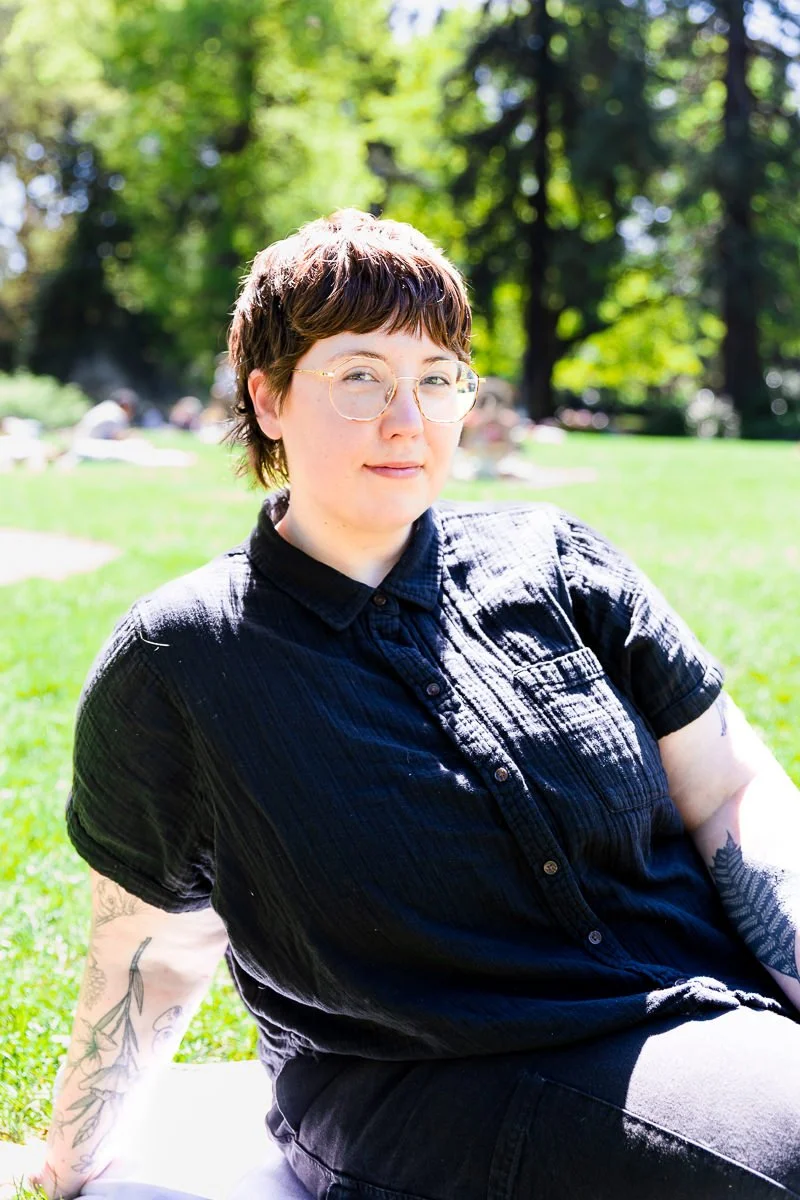
Since 2018, I've worked in various mental health settings including community mental health, school-based outpatient, psychiatric residential treatment, private group practice, and crisis lines. I earned my Bachelor's degree in Psychology from Truman State University in Kirksville, Missouri and my Master's degree in Professional Mental Health Counseling from Lewis & Clark College here in Portland. I'm licensed in the state of Oregon as an LPC (Licensed Professional Counselor).
My own journey to becoming a therapist was started by spending years in therapy without much success and with a lot of confusion why. It’s very meaningful to me that now I get to help others get where they’d like to be a lot more quickly.
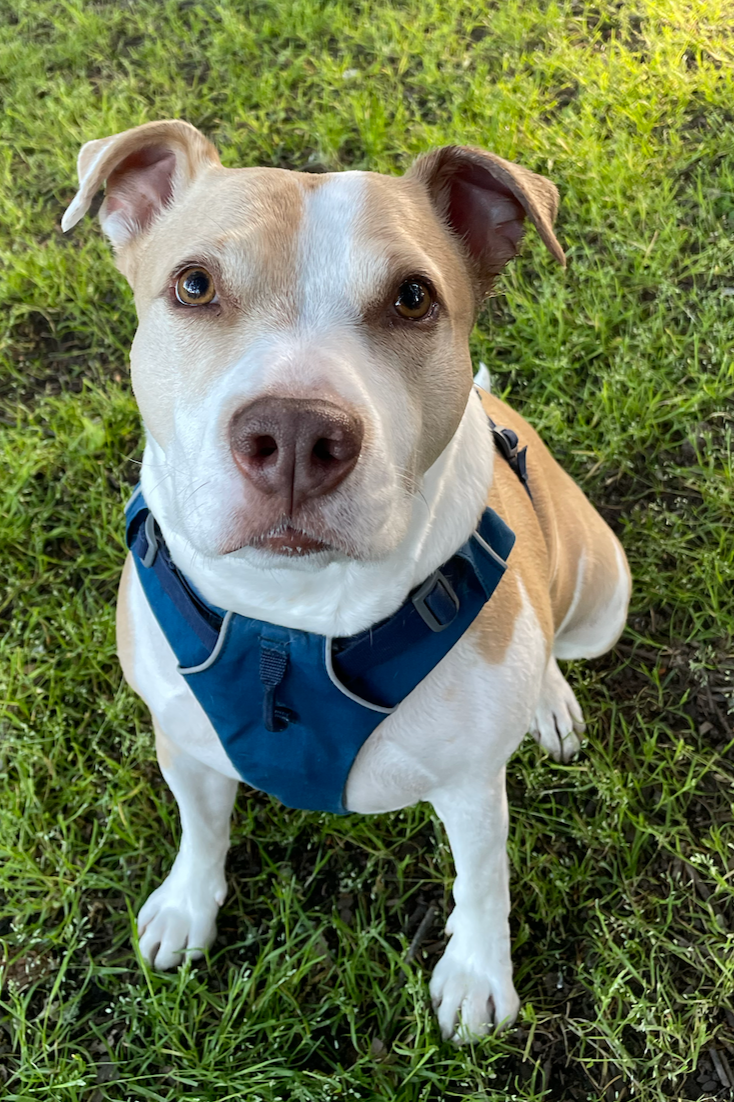
When I'm not being a therapist, I like being outside in a good park, eating all the vegetarian food we have here in Portland, and doting on my senior pitbull Linus (you will likely hear him snoring in the background of our sessions). I use she/they pronouns.
Get in touch.
As of 9/9: closed to new clients. Please check back soon for updated availability.
If you’d like to connect to inquire about services, please email me at abby@echopsychotherapypdx.com. I will get back to you even if unable to help. Things to include can be a quick summary of what you’re looking to get out of therapy, your current scheduling needs, and how you’re hoping to pay for therapy. My email is encrypted and secure.
You can also book a free consultation here: https://echopsychotherapypdx.sessionshealth.com/request